

September 2, 2026
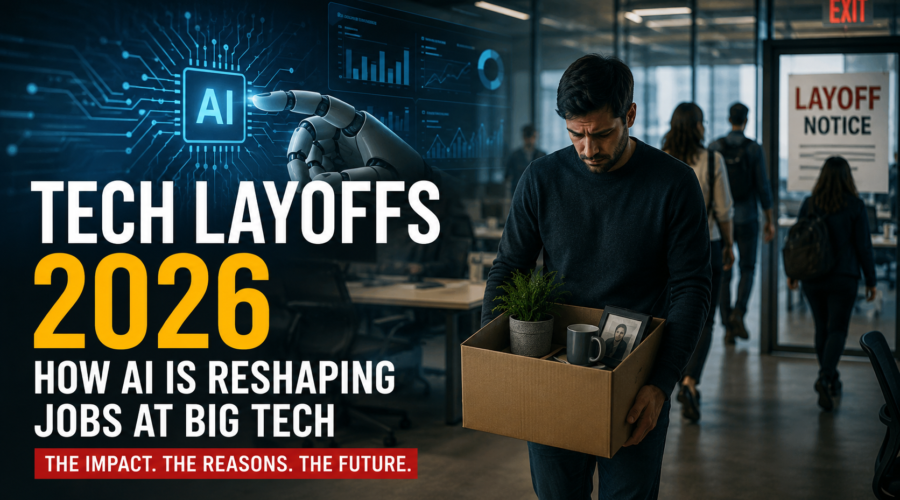
The technology industry is going through another major workforce shake-up in 2026, but this time the story is closely tied to the rapid expansion of artificial intelligence.
More than 175,000 technology workers have reportedly been affected by layoffs across the industry so far this year, according to recent industry tracking. Major companies including Microsoft, Amazon, Meta, Oracle and others have announced workforce reductions or restructuring while continuing to invest heavily in artificial intelligence.
That has created an important question for workers and job seekers:
Is AI actually replacing technology jobs, or is it changing the type of work companies need?
The answer appears to be more complicated than a simple yes or no.
Why Are Tech Companies Cutting Jobs in 2026?
The current wave of technology layoffs is being driven by several factors.
Companies are trying to reduce costs, simplify management structures, improve productivity and redirect spending toward artificial intelligence and data-center infrastructure.
Unlike some previous technology downturns, several companies making workforce reductions are still investing heavily in new technologies.
That means layoffs do not necessarily indicate that the technology sector is collapsing.
Instead, many companies are changing where they spend money and which skills they consider most valuable.
Recent reporting has linked workforce reductions at several major technology companies to restructuring and increased AI investment.
How AI Is Changing Technology Jobs
Artificial intelligence can now handle an increasing number of repetitive tasks that previously required human workers.
These include:
- Basic software coding
- Data analysis
- Customer support
- Content production
- Software testing
- Documentation
- Research assistance
- Administrative tasks
- Some marketing functions
However, AI does not automatically eliminate an entire profession.
In many cases, companies are using AI to allow smaller teams to perform work that previously required larger teams.
That distinction is important.
A software engineer, for example, may use AI coding assistants to produce and test code faster. The result could be higher productivity rather than the complete elimination of the engineering role.
Big Tech Is Redirecting Money Toward AI
The biggest technology companies are spending enormous amounts of money building AI infrastructure, developing models and integrating AI into their products.
At the same time, some are reducing headcount in other areas.
Oracle, for example, has gone through significant workforce reductions while expanding investment in AI data-center infrastructure.
Meta also went through a major restructuring connected to its aggressive AI strategy. Reuters reported that CEO Mark Zuckerberg’s 2026 restructuring plan initially envisioned dramatically smaller teams and greater use of AI agents, although the company later changed parts of that strategy after internal concerns about productivity and implementation emerged.
This suggests that the AI transition is not simply a story of companies replacing everyone with machines.
Companies are still learning where AI works well—and where human employees remain essential.
Microsoft, Amazon and Other Companies Are Reshaping Their Workforces
Microsoft has continued restructuring parts of its workforce while expanding its AI and cloud businesses.
Amazon has also announced significant workforce reductions while continuing to invest in technology and AI infrastructure.
Recent reporting shows that the overall technology workforce picture is mixed: some companies are cutting employees while others are still adding workers in selected areas.
This creates a new type of technology job market.
There may be fewer opportunities in some traditional roles, while demand increases for workers with experience in:
- Artificial intelligence
- Machine learning
- Cloud computing
- Cybersecurity
- Data engineering
- AI infrastructure
- Robotics
- Semiconductor technology
- AI product development
AI May Eliminate Some Tasks, Not Entire Careers
One of the biggest mistakes in the current AI debate is treating a job as one single task.
Most jobs are actually collections of many different activities.
AI may automate some of those activities while leaving other responsibilities to humans.
For example, an AI system might generate a first draft of software code, but a human engineer may still need to:
- Understand the business requirement
- Review the generated code
- Test security
- Fix errors
- Make architectural decisions
- Communicate with customers
- Take responsibility for the final product
This means the value of some technology workers could shift from simply producing output to managing, reviewing and improving AI-generated output.
The Skills Employers May Want More in 2026
As AI becomes part of everyday business operations, technical knowledge alone may no longer be enough.
Workers who combine technical skills with problem-solving and communication abilities could have an advantage.
Some of the skills worth developing include:
1. AI Literacy
Workers do not necessarily need to become AI researchers.
But understanding how modern AI systems work, what they can do and where they fail is becoming increasingly valuable.
2. Data Skills
AI systems depend heavily on data.
Understanding data analysis, databases and data quality can therefore remain important even as automation increases.
3. Cybersecurity
AI is creating new security risks as well as new defensive tools.
Companies need professionals who can protect systems, data and AI infrastructure.
4. Cloud and Infrastructure
AI applications require enormous computing resources.
Cloud infrastructure, data centers and specialized computing hardware are therefore becoming increasingly important parts of the technology economy.
5. Human Skills
Communication, leadership, creativity and decision-making remain difficult to automate completely.
Workers who combine technical knowledge with these skills may be better positioned for the changing market.
Are AI Jobs Safe From Layoffs?
Not necessarily.
It may seem logical that workers specializing in AI would automatically have greater job security.
But the technology industry is changing so quickly that even AI-focused teams can be reorganized.
The bigger lesson is that no single technology job should be considered permanently protected from restructuring.
Workers may need to continuously update their skills as AI capabilities improve.
The Job Market Is Becoming More Competitive
For workers who have already lost technology jobs, finding another position can be difficult.
Recent accounts from laid-off employees at companies including Google, Microsoft, Meta and Intel describe a competitive hiring environment and longer job searches for some professionals.
This means that the effects of layoffs can extend far beyond the initial announcement.
Workers may have to compete for fewer openings while simultaneously learning new technologies.
For recent graduates, the situation can be particularly challenging because entry-level tasks are often among the easiest to automate.
What This Means for New Technology Graduates
Students entering the technology industry in 2026 should not assume that learning one programming language will be enough for an entire career.
Instead, they may benefit from developing a broader skill set.
A strong combination could include:
Programming + AI tools + data + cloud + cybersecurity + communication
The goal should not be to compete directly against AI.
It should be to learn how to use AI effectively while developing capabilities that automated systems cannot easily reproduce.
Will AI Create New Jobs?
There are reasons to believe that AI will create new types of work as well as eliminate or reduce demand for some existing tasks.
Companies need people to build AI systems, maintain infrastructure, evaluate AI outputs, secure AI applications and integrate these systems into businesses.
The software industry is already showing signs of this transition.
Reuters recently reported that the market’s view of AI in software has been shifting from fear of replacement toward recognition of AI’s potential to improve productivity, while cybersecurity companies are benefiting from increased demand created by AI-related threats.
The transition, however, is unlikely to be equally positive for everyone.
Some workers may find new opportunities, while others may need significant retraining.
The Bigger Picture
The 2026 technology layoffs should not be interpreted simply as proof that AI is taking everyone’s job.
The reality is more nuanced.
Companies are using AI to change how work is organized, how teams are structured and how quickly employees can complete certain tasks.
At the same time, businesses are redirecting capital toward AI infrastructure and other emerging technologies.
That can reduce demand for some traditional roles while increasing demand for new skills.
The result could be a technology workforce that is smaller in some areas but more specialized in others.
What Happens Next?
The technology labor market is likely to remain volatile as companies determine how much work can realistically be automated.
The biggest question is no longer simply:
“Will AI take jobs?”
A more useful question may be:
“Which parts of today’s jobs will AI change, and which new skills will become valuable?”
For technology workers, that shift in thinking could be critical.
The companies that successfully adopt AI will likely need people who understand both the technology and the business problems it is supposed to solve.
And for workers, the ability to continuously learn may become one of the most valuable career skills of all.
Frequently Asked Questions
Are tech layoffs increasing in 2026?
Yes. Recent industry tracking indicates that more than 175,000 technology workers have been affected by layoffs in 2026 so far.
Are AI companies also laying off workers?
AI-focused teams are not completely immune to restructuring. Companies are changing workforce plans as they evaluate how AI can improve productivity and reorganize work.
Will AI replace software engineers?
AI can automate parts of software development, but software engineering involves much more than writing code. Architecture, testing, security, product decisions and human communication remain important.
What technology jobs could grow because of AI?
Potential growth areas include AI engineering, machine learning, data engineering, cloud infrastructure, cybersecurity, AI safety and AI product development.
What should tech workers learn in 2026?
AI literacy, data skills, cloud computing, cybersecurity and strong problem-solving and communication skills are useful areas to consider.
Are tech layoffs a sign that the technology industry is collapsing?
Not necessarily. Many companies are simultaneously reducing some roles and increasing investment in AI, cloud computing and infrastructure. The industry is undergoing a workforce transformation rather than simply disappearing.
Final Takeaway
The 2026 tech-layoff wave is becoming one of the clearest signs that artificial intelligence is changing the technology workforce.
For some employees, that means layoffs.
For others, it could mean new opportunities.
The winners in the next phase of the technology industry may not simply be people who know how to code. They may be the workers who understand how to combine human judgment with AI-powered tools.
BeWebStuff will continue tracking the latest developments in technology, artificial intelligence, jobs and the changing digital economy.