
Published: September 15, 2026
Category: USA Trending → Trump & U.S. Politics
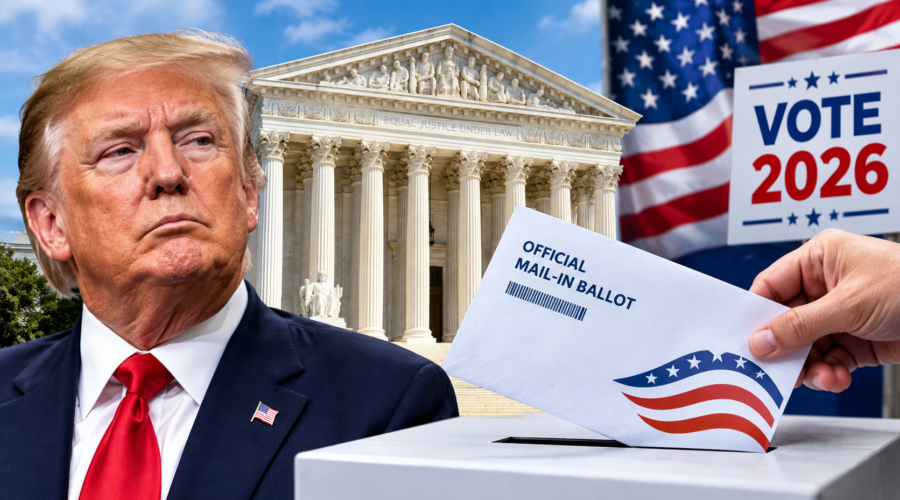
The U.S. Supreme Court has rejected the Trump administration’s request to allow new federal restrictions on mail-in voting ahead of the 2026 midterm elections.
The decision keeps a lower-court order blocking a new U.S. Postal Service rule that would have introduced additional requirements for states and voters using mail ballots. The ruling is a significant setback for President Donald Trump’s effort to change how mail-in voting is handled before November’s congressional elections.
What Did the Supreme Court Decide?
On September 14, the Supreme Court declined to lift an injunction that had stopped the U.S. Postal Service from enforcing the new mail-ballot requirements.
The administration had asked the justices to allow the rules to take effect before the midterm elections. Instead, the court left the lower-court restrictions in place, meaning states can continue using their existing mail-ballot procedures for the 2026 election.
Justices Samuel Alito and Clarence Thomas dissented. Justice Brett Kavanaugh also indicated concerns about the timing of the proposed changes while agreeing that the restrictions should remain blocked for the upcoming election.
What Were Trump’s Proposed Mail-Ballot Changes?
The Trump administration had sought tighter federal controls over mail voting.
Among the proposed changes were requirements involving voter lists, ballot envelopes and USPS-approved procedures. The plan would have given the Postal Service a greater role in determining whether certain mail ballots could be delivered under the new standards.
The administration argued that the changes were intended to strengthen election security and address concerns about voting procedures.
Critics, however, argued that introducing major new requirements shortly before the election could create confusion, delay ballots and potentially prevent valid votes from being counted.
Why Did Lower Courts Block the Rules?
The legal fight began after Trump’s March 2026 executive order seeking changes to mail-in voting.
Federal Judge Indira Talwani previously blocked key parts of the administration’s plan, finding that the rules were likely unlawful and could create serious problems for voters and election administrators. The First Circuit later declined to allow the restrictions to take effect.
A second federal judge also blocked the Postal Service rule, adding another legal obstacle for the administration just weeks before the midterm elections.
What Does the Decision Mean for Voters?
For the 2026 midterm elections, the immediate effect is that states can continue using their existing mail-ballot systems rather than adopting the proposed federal USPS requirements.
That is especially important because voting is already underway in some states, making a last-minute change to election procedures potentially complicated for election officials and voters.
The ruling does not mean that every future legal challenge involving mail voting is permanently settled. Instead, it prevents the specific restrictions at issue from being implemented for the upcoming election while the broader legal disputes continue.
Why Is This Important for the 2026 Midterm Elections?
The 2026 midterm elections will determine control of the U.S. House of Representatives and Senate.
Mail voting is an important part of the American election system, with a substantial share of voters using absentee or mail ballots. Keeping the existing procedures in place gives election officials more certainty as they prepare for November.
The Supreme Court’s decision therefore has both legal and political significance.
For the Trump administration, it represents a major judicial setback in its attempt to impose new mail-voting requirements.
For states and election administrators, it provides temporary clarity by allowing existing systems to remain in place for the upcoming election.
What Happens Next?
The legal debate over mail-in voting is unlikely to disappear after this decision.
The Trump administration and its opponents may continue to fight over federal authority, election administration and the role of the U.S. Postal Service in handling ballots.
For voters, the most important takeaway is that the Supreme Court’s latest action leaves the existing state-level mail-ballot procedures in place for the 2026 midterm elections.
Election officials will continue providing instructions about registration, ballot requests, deadlines and ballot return procedures according to the rules applicable in each state.
Bottom Line
The Supreme Court has blocked the Trump administration’s attempt to put new USPS mail-ballot restrictions into effect ahead of the 2026 midterm elections.
The decision allows states to continue using their existing mail-voting procedures, avoiding a major last-minute change to the election system.
The ruling is a significant moment in the continuing legal battle over voting rules, federal authority and election administration in the United States.
As the November midterms approach, mail voting and election rules are likely to remain major political and legal issues across the country.
Frequently Asked Questions
1. Did the Supreme Court block Trump’s mail-ballot restrictions?
Yes. The Supreme Court rejected the Trump administration’s request to lift a lower-court order blocking the new USPS mail-ballot rules.
2. Will existing mail voting procedures continue?
For the 2026 midterm elections, states can continue using their existing mail-ballot procedures rather than implementing the blocked USPS requirements.
3. Why did Trump want new mail-ballot rules?
The administration argued that tighter rules were needed to address election-security and voting-integrity concerns. Opponents argued that the changes could create confusion and interfere with valid ballots.
4. When are the 2026 U.S. midterm elections?
The 2026 congressional midterm elections are scheduled for November 2026.
5. Does this decision permanently settle mail-voting rules?
No. The ruling prevents the specific restrictions from taking effect for the upcoming election, but broader legal and political disputes over mail voting can continue.
6. Who controls election administration in the United States?
States play a major role in administering elections, including establishing many procedures for voting and mail ballots. The extent of federal authority over those procedures remains an important legal issue in this dispute.