
September 4, 2026 — BeWebStuff Entertainment
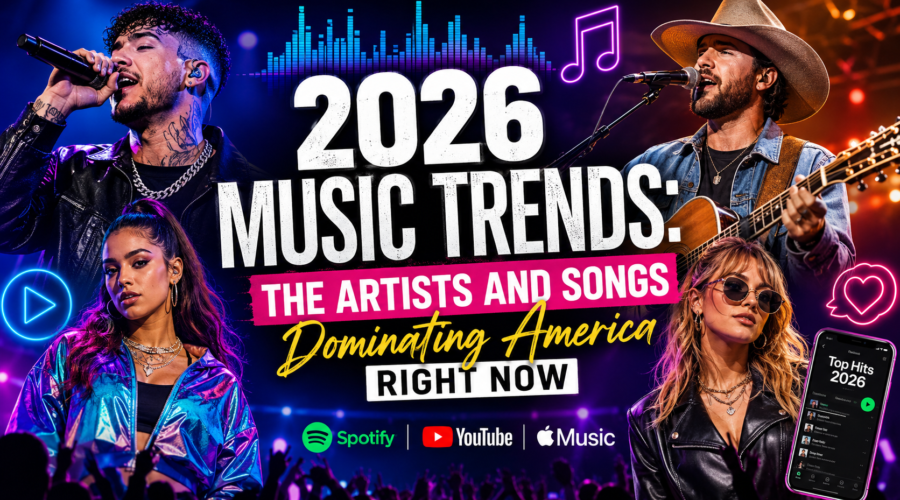
The American music scene is changing quickly in 2026. Streaming remains the center of music discovery, but listeners are showing an increasingly broad appetite for different genres, languages and sounds.
Country music is gaining serious momentum, Latin music continues to expand its audience, and social platforms are playing an increasingly important role in how listeners discover artists and songs.
At the same time, familiar stars and emerging artists are competing for attention in an increasingly crowded digital music landscape.
According to Luminate’s 2026 Midyear Report, U.S. on-demand audio song streams reached 732.7 billion in the first half of 2026, up from 696.6 billion during the same period in 2025.
So, what exactly is driving America’s music conversation right now?
1. Country Music Is Having a Major Moment
One of the biggest stories in American music during 2026 has been the continued strength of country music.
Country is attracting younger, streaming-focused listeners while traditional country sounds are also finding new audiences.
A major example is Ella Langley, whose “Choosin’ Texas” has become one of the year’s biggest U.S. songs.
The track recently reached 20 consecutive weeks at No. 1 on the Billboard Hot 100, according to Axios.
That success is particularly notable because the song leans into traditional country rather than relying heavily on a pop crossover formula.
The result shows that classic country sounds can still become major mainstream hits in the streaming era.
2. Latin Music Continues to Break Into the Mainstream
Latin music is another major force shaping America’s 2026 music landscape.
Luminate reported that Spanish-language music represented 9.4% of U.S. on-demand audio streams during the first half of 2026.
That means nearly one out of every ten U.S. streams was in Spanish.
The growing popularity of artists such as Bad Bunny and other Latin performers is helping push Latin sounds further into mainstream American listening habits.
This isn’t simply a niche trend anymore. Latin music is becoming an important part of the broader U.S. music market.
3. Streaming Is Still the Main Engine
Despite the resurgence of physical formats, streaming continues to dominate the modern music business.
U.S. recorded music revenue approached $6 billion in the first half of 2026, with subscription streaming remaining the industry’s biggest revenue source.
The latest RIAA figures show that premium subscription streaming generated approximately $3.11 billion for rights holders in the first half of 2026, up 7.8% year over year.
For listeners, this means discovering a new song can happen instantly.
For artists, it means a single viral moment can potentially introduce their music to millions of people.
4. Social Media Has Become a Music Discovery Machine
Music discovery is no longer limited to radio, music television or traditional charts.
TikTok, YouTube and other social platforms are increasingly connected to the way younger listeners find new artists.
A 2026 YPulse music report found that Spotify, YouTube and TikTok have become part of a broader music ecosystem for young consumers, with social media identified as a leading channel for discovering new artists and songs.
This has changed how artists promote releases.
A song doesn’t necessarily need to start as a traditional radio hit. It can first become popular through a short video, dance trend, meme, fan edit or viral clip.
5. Genre Boundaries Are Becoming Less Important
Another defining characteristic of 2026 is the blending of musical styles.
Listeners aren’t necessarily choosing only one genre anymore.
Country, pop, R&B, hip-hop, rock and Latin influences are increasingly crossing paths.
Luminate’s midyear analysis found that R&B/hip-hop remained the largest U.S. streaming genre combination, but its share of consumption has been challenged by growth from country and Latin music.
This suggests that America’s music audience is becoming more genre-diverse rather than simply abandoning one style for another.
6. Viral Songs Can Come From Almost Anywhere
The current U.S. charts also demonstrate how unpredictable music discovery has become.
As of September 3, “Choosin’ Texas” by Ella Langley was leading Apple’s U.S. Top Songs chart, while the chart included substantial representation from hip-hop/rap and country alongside pop, R&B and Latin tracks.
Spotify’s latest 2026 Songs of Summer selections also highlighted Ella Langley alongside artists including Sam Fender and Olivia Dean, showing how different sounds can define the same listening season.
The modern hit isn’t necessarily tied to one musical formula.
7. Nostalgia Is Making a Comeback
Interestingly, the digital music era hasn’t eliminated interest in physical music.
CD sales are experiencing a notable revival in the United States.
Reuters reported that U.S. recorded music revenue increased nearly 7% during the first half of 2026, with renewed demand for CDs contributing to the industry’s growth.
This follows the broader resurgence of vinyl and other physical formats.
For some fans, owning a physical album offers something streaming cannot: a tangible connection to an artist.
8. Older Songs Are Finding New Audiences
Streaming has also created a second life for older music.
Listeners can rediscover songs from previous decades through playlists, movies, television shows, social media videos and algorithmic recommendations.
The Digital Media Association’s 2026 research found that 88% of streamers use streaming services to discover older songs, demonstrating that music discovery isn’t limited to new releases.
This creates opportunities for both established artists and catalog owners.
A decades-old track can suddenly become relevant again because of a viral moment.
9. AI Music Is Becoming Part of the Conversation
Artificial intelligence is also influencing the music industry in 2026.
AI-generated tracks remain a controversial but increasingly visible part of the streaming ecosystem.
Luminate identified several AI-generated songs receiving substantial streams in 2026, including “Livin’ on Borrowed Time” by Breaking Rust, which was the most-streamed AI-generated song in the U.S. in its midyear analysis.
However, AI music also raises important questions around copyright, artist consent, royalties and transparency.
The technology is likely to remain one of the industry’s biggest debates.
10. What Comes Next for American Music?
The biggest takeaway from 2026 is that there is no single sound dominating everything.
Instead, American music is becoming increasingly diverse.
Country is growing.
Latin music is expanding.
R&B and hip-hop remain enormously influential.
Pop continues to evolve.
Rock and alternative music maintain dedicated audiences.
And social media continues to reshape how songs become hits.
At the same time, streaming platforms are making it easier than ever for listeners to discover music from different generations and countries.
Final Thoughts
The 2026 music trends show that America’s music audience is becoming more diverse, connected and unpredictable.
Streaming remains the foundation of the industry, but social media, viral culture, physical music formats and genre-crossing artists are all influencing what Americans listen to.
The biggest story may not be that one genre is replacing another.
Instead, America’s music culture is becoming a much bigger mix of sounds.
For artists, that creates new opportunities to reach audiences without relying exclusively on traditional gatekeepers.
For fans, it means there has never been a better time to discover something new.
Frequently Asked Questions
What is the biggest music trend in America in 2026?
One of the biggest trends is the diversification of U.S. music consumption, particularly the continued growth of country and Latin music alongside established genres such as R&B and hip-hop.
Is country music trending in 2026?
Yes. Country music is experiencing strong mainstream momentum in the U.S., with artists such as Ella Langley demonstrating the genre’s ability to produce major crossover hits.
Is Latin music becoming more popular in the USA?
Yes. Spanish-language music accounted for 9.4% of U.S. on-demand audio streams in the first half of 2026, according to Luminate.
How are people discovering new music in 2026?
Streaming services and social media are major discovery channels. Research from DIMA and YPulse highlights streaming and social platforms as important ways listeners discover both new and older music.
Is streaming still growing?
Yes. U.S. on-demand audio song streams reached 732.7 billion in the first half of 2026, according to Luminate.
Are CDs becoming popular again?
There has been a notable resurgence in CD demand. Reuters reported that the U.S. recorded music market grew nearly 7% in the first half of 2026, with CDs contributing to the increase.
Is AI-generated music becoming popular?
Some AI-generated tracks have attracted significant streaming numbers, although AI music remains controversial because of questions surrounding copyright, consent and artist compensation.
What will shape music trends in the future?
Streaming algorithms, social media, short-form video, genre blending, AI technology and the continued globalization of American music are likely to remain major influences.