

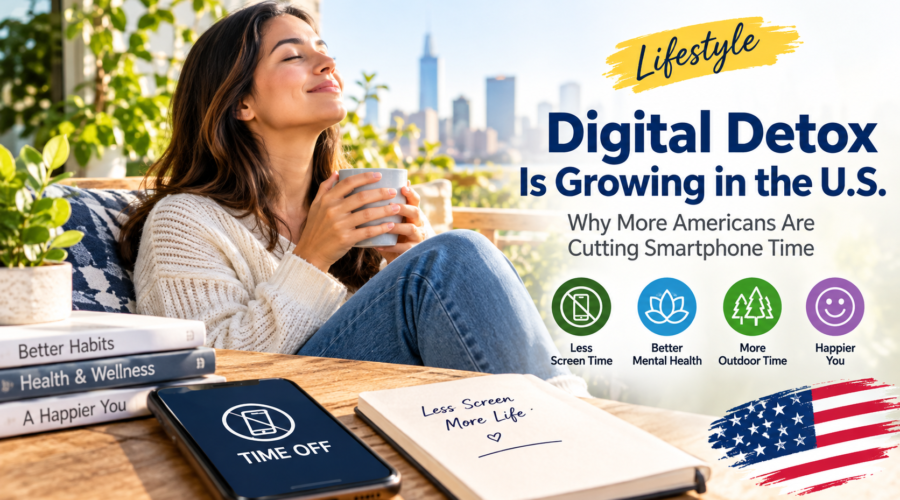
Americans Are Rethinking Their Relationship With Smartphones
Smartphones have become an essential part of everyday American life. People use them for work, shopping, entertainment, social media, banking, news and staying connected with family and friends.
But in 2026, a growing number of Americans are beginning to question how much time they actually want to spend looking at a screen.
According to a recent Pew Research Center survey, just over half of U.S. adults say they spend too much time on their smartphones. The concern is even stronger among Americans under 50.
That shift is helping push digital detox from a niche wellness idea into a broader lifestyle conversation.
Instead of completely abandoning technology, many people are looking for a healthier balance between their online and offline lives.
What Is a Digital Detox?
A digital detox doesn’t necessarily mean throwing away your smartphone.
For most people, it simply means intentionally reducing unnecessary screen time.
That could include:
- Turning off nonessential notifications
- Taking breaks from social media
- Keeping phones away during meals
- Avoiding smartphones before bedtime
- Spending more time outdoors
- Reading physical books instead of scrolling
- Creating phone-free periods during the day
- Using technology only when it adds real value
The goal is not to reject technology. It is to regain control over how technology fits into everyday life.
Why Smartphone Time Has Become a Lifestyle Issue
Smartphones are designed to keep users engaged.
Notifications, short videos, social platforms, messages and endless feeds can make it easy to check a phone repeatedly throughout the day.
Over time, checking the phone can become automatic.
A person may pick up their device while waiting for coffee, watching television, eating lunch or even talking with friends.
That is why the conversation around smartphone use is increasingly becoming part of the broader American wellness and lifestyle movement.
Recent lifestyle coverage also points toward a growing interest in smaller, sustainable changes rather than dramatic personal transformations. Forbes recently highlighted the idea of making simple, consistent changes to improve whole-being and career well-being.
The Rise of “Low-Tech” Moments
One interesting development is that digital detox doesn’t always mean spending an entire weekend without technology.
Instead, Americans are experimenting with small low-tech moments.
For example, someone might leave their phone in another room while having dinner.
Another person might take a morning walk without checking notifications.
Some people are choosing to read a physical magazine or book before bed instead of scrolling through social media.
These small changes can make digital detox feel realistic rather than restrictive.
Social Media Is Part of the Conversation
Social media remains one of the biggest reasons people spend time on their smartphones.
Platforms are designed around continuous content consumption, making it easy to move from one video or post to another.
For younger Americans especially, smartphones aren’t simply communication tools. They are also entertainment centers, shopping platforms and social spaces.
That makes reducing screen time more complicated.
A complete break from smartphones may not be practical for many people.
Instead, the emerging approach is intentional technology use.
The question is becoming less about:
“Can I live without my phone?”
And more about:
“Do I really need to use my phone right now?”
The Wellness Industry Is Moving Beyond Fitness
The digital detox trend also fits into a much larger wellness movement.
Wellness is increasingly influencing travel, homes, personal routines and consumer choices.
For example, recent lifestyle coverage has highlighted a shift toward wellness-centered homes and spaces designed to support everyday well-being.
That suggests wellness is no longer limited to gyms, diets and traditional spa experiences.
People are increasingly thinking about the overall environment in which they live.
That includes how much technology surrounds them.
What a Simple Digital Detox Day Could Look Like
A realistic digital detox routine doesn’t need to be extreme.
A typical day could look like this:
Morning:
Avoid checking social media immediately after waking up.
Breakfast:
Keep the phone away from the table.
Work:
Turn off unnecessary notifications and check messages at planned times.
Afternoon:
Take a short walk without constantly checking the phone.
Evening:
Spend time with family, cook, exercise or enjoy a hobby without multitasking on a screen.
Before bed:
Put the smartphone away and choose reading, stretching or another relaxing activity.
The idea is simple: create specific parts of the day where the phone isn’t the center of attention.
Could “Phone-Free” Become the Next Lifestyle Status Symbol?
There is also a cultural side to this trend.
For years, being constantly connected was associated with productivity and convenience.
Now, the opposite may increasingly signal something different: having the ability to disconnect.
Luxury lifestyle trends are already showing a growing interest in privacy, nature, meaningful experiences and spaces that help people escape constant digital noise.
This could make digital wellness an increasingly important part of lifestyle culture.
Instead of showing how connected they are, some consumers may increasingly value having time when they are completely offline.
Why This Trend Could Continue
The smartphone isn’t disappearing.
Americans will continue to use smartphones for work, communication, entertainment and everyday tasks.
But the relationship between people and their devices may change.
The latest Pew findings suggest that many Americans already recognize that they may be spending more time on smartphones than they would like.
That creates an opportunity for a new type of lifestyle: one where technology remains important but doesn’t dominate every moment of the day.
The Bottom Line
The digital detox movement isn’t really about giving up smartphones.
It’s about using technology intentionally.
As Americans become more aware of how much time they spend scrolling, checking notifications and consuming digital content, small phone-free habits could become a normal part of everyday life.
The biggest lifestyle trend may not be going completely offline.
It may simply be learning when to put the phone down.
FAQs
1. What is a digital detox?
A digital detox is a deliberate reduction in unnecessary smartphone, social media and screen use.
2. Are Americans spending too much time on smartphones?
Yes. A recent Pew Research Center survey found that just over half of U.S. adults say they spend too much time on their smartphones.
3. Does digital detox mean giving up your smartphone?
No. Most digital detox routines focus on reducing unnecessary use rather than completely eliminating smartphones.
4. How can I start a digital detox?
Start with small changes, such as turning off unnecessary notifications, creating phone-free meals and avoiding social media before bed.
5. Why is digital detox becoming a lifestyle trend?
Growing awareness of excessive smartphone use, combined with broader interest in wellness and intentional living, is helping digital detox become part of the modern lifestyle conversation.