

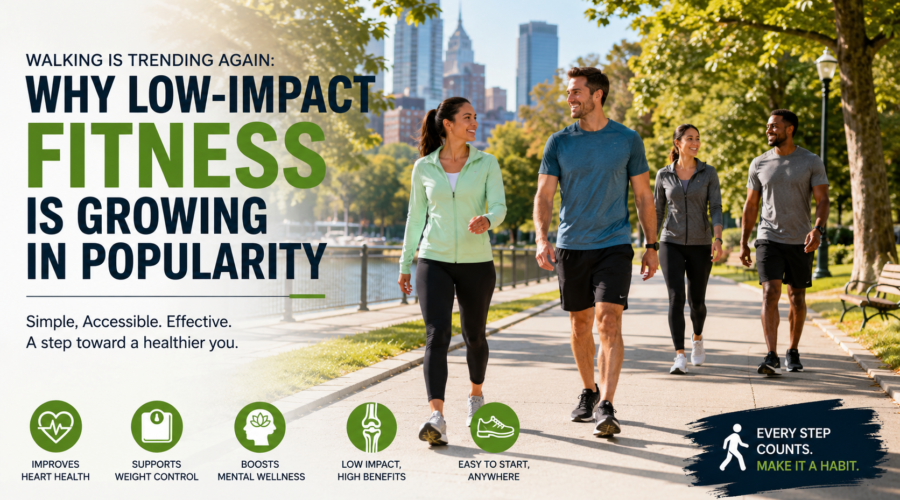
Walking is having a major moment in the fitness world. From neighborhood walks and treadmill sessions to structured walking challenges, more people are looking for simple ways to stay active without making every workout feel like an intense training session.
The renewed interest in walking fits into a broader shift toward sustainable wellness. Instead of focusing only on exhausting workouts, people are increasingly interested in activities they can realistically maintain as part of everyday life.
And walking has one major advantage: it is accessible, inexpensive and easy to fit into a busy schedule.
The American Heart Association says walking is one of the easiest ways for most people to become more active, while current CDC guidance emphasizes that regular physical activity can provide important benefits for heart health, sleep, mental well-being, healthy weight and chronic disease prevention.
Why Is Walking Trending Again?
Fitness trends often move toward complicated workouts, expensive memberships and specialized equipment. Walking is almost the opposite.
You can walk outside, around your neighborhood, at a park, on a treadmill or simply incorporate more movement into your daily routine.
That simplicity is one reason walking continues to attract attention.
The trend also reflects a growing interest in low-impact fitness—exercise that can increase physical activity without requiring jumping, sprinting or highly demanding movements.
For people who are new to exercise, returning to fitness or simply trying to become more active, walking can be an approachable starting point.
The Rise of Low-Impact Fitness
Low-impact exercise doesn’t necessarily mean “easy.”
A brisk walk can raise your heart rate and become a meaningful aerobic workout. The intensity can also be adjusted according to your fitness level.
For example, someone starting out might begin with a comfortable 10- or 15-minute walk. Over time, they can increase the duration, pace or frequency.
The American Heart Association recommends that adults aim for at least 150 minutes of moderate-intensity aerobic activity each week, along with muscle-strengthening activities on at least two days per week. It also notes that activity can be broken into shorter sessions throughout the week.
That makes walking particularly practical for people who don’t have an hour available for a traditional workout.
Walking Can Support Heart Health
One of the biggest reasons walking remains popular is its connection with cardiovascular health.
Regular physical activity can help lower the risk of heart disease and stroke, and brisk walking can count toward the moderate-intensity activity recommended for adults.
The American Heart Association also highlights walking as a way to support heart health and says regular walking can help improve blood pressure, blood sugar and cholesterol levels.
However, walking should be viewed as one part of an overall healthy lifestyle rather than a replacement for medical treatment.
Walking May Help With Mental Wellness
The walking trend isn’t only about physical fitness.
Getting outside and moving can also provide a mental break from work, screens and daily responsibilities.
The CDC reports that physical activity can reduce short-term feelings of anxiety and improve sleep quality, while regular activity is associated with a lower risk of depression.
That’s one reason a simple walk can become more than exercise.
A morning walk can create a quiet start to the day. An evening walk can provide a transition between work and personal time. Walking with friends or family can also turn exercise into a social activity.
You Don’t Need 10,000 Steps to Get Started
The popularity of step counters has made 10,000 steps a day a familiar fitness goal.
But people don’t need to become obsessed with reaching one particular number.
The CDC notes that even relatively small increases in physical activity can provide health benefits, and its guidance emphasizes sitting less and moving more.
For someone currently doing very little activity, adding a short walk may be a much more realistic first step than immediately trying to hit a large daily step target.
The goal should be consistent movement that fits your lifestyle.
Short Walks Can Add Up
One of the most useful things about walking is that it doesn’t have to happen in one long workout.
For example:
- 10 minutes after breakfast
- 10 minutes during a lunch break
- 10 minutes after dinner
Together, that’s 30 minutes of movement.
The American Heart Association specifically notes that shorter walking sessions can be accumulated throughout the week.
This approach can make exercise feel less intimidating for people with busy schedules.
Walking for Weight Management
Walking can also be part of a healthy weight-management strategy.
Physical activity increases energy expenditure and can help people maintain a healthy weight when combined with appropriate nutrition and other healthy habits.
The CDC says regular physical activity can help with maintaining a healthy weight, although the amount of activity needed can vary considerably from person to person.
It’s important to avoid unrealistic expectations, though.
Walking doesn’t guarantee weight loss by itself. Results depend on factors including nutrition, activity level, sleep, genetics and overall lifestyle.
Why Walking Works for Busy People
One reason low-impact fitness is gaining attention is convenience.
A traditional workout might require:
- A gym membership
- Special equipment
- Travel time
- A scheduled class
- A significant block of free time
Walking can require none of those things.
A person can walk during a lunch break, while listening to a podcast, while walking a dog or while meeting a friend.
That flexibility makes walking easier to integrate into everyday life.
Walking Challenges Are Adding a Social Element
Another reason walking is getting attention is the popularity of structured challenges.
Social media has helped turn walking into something people can track and share. Step goals, walking streaks and timed walking routines can create a sense of accountability.
Recent social-media fitness trends have included structured walking challenges such as the “6-6-6” routine, which encourages people to build walking into their daily schedule. The exact timing is less important than finding a routine that someone can consistently maintain.
The broader lesson is simple:
A fitness routine doesn’t have to be complicated to be motivating.
How to Start a Walking Routine
If you’re currently inactive, there’s no need to start with a long or intense session.
A simple approach could look like this:
Week 1
Start with a comfortable 10–20 minute walk several days a week.
Week 2
Gradually increase the duration or add another walking day.
Week 3
Introduce periods of faster walking if comfortable.
Week 4
Work toward a consistent weekly routine that fits your schedule.
The American Heart Association recommends starting with a manageable amount and gradually increasing time and distance.
Make Your Walk More Enjoyable
Walking becomes easier to maintain when it doesn’t feel like a chore.
Try:
- Listening to music
- Listening to a podcast
- Walking with a friend
- Exploring a new neighborhood
- Walking in a park
- Taking a walk during your lunch break
- Walking with your dog
- Tracking your progress
The goal isn’t necessarily to make every walk harder.
Sometimes the most valuable walk is simply the one you actually take.
Don’t Forget Strength Training
Walking is excellent for aerobic activity, but a balanced fitness routine shouldn’t rely exclusively on walking.
Current adult activity recommendations also call for muscle-strengthening activities at least two days per week.
That could include activities such as:
- Bodyweight exercises
- Resistance bands
- Squats
- Lunges
- Weight training
Combining walking with strength training can create a more complete fitness routine.
Walking May Be Especially Appealing as People Age
Low-impact movement can also be attractive to older adults because it can be adapted to different fitness levels.
Physical activity can support balance, bone health, mobility and independence, while regular activity is associated with reduced risks of falls and several chronic diseases.
However, anyone with significant health limitations, persistent pain or mobility concerns should discuss an appropriate exercise plan with a healthcare professional.
The Bigger Wellness Trend: Sustainable Fitness
The renewed interest in walking represents something bigger than a single fitness trend.
People are increasingly looking for sustainable habits rather than short-term challenges.
A workout that is extremely difficult may be impressive, but a moderate activity someone can maintain for months or years may have a much bigger impact on their overall lifestyle.
Walking fits that philosophy perfectly.
It doesn’t require becoming a professional athlete. It simply encourages people to move more.
Final Thoughts
Walking may be one of the simplest fitness activities around, but its simplicity is exactly what makes it powerful.
As interest in low-impact fitness continues to grow, walking offers an accessible way for many people to add more movement to their daily routines.
Whether it’s a 10-minute walk during lunch, a brisk evening walk around the neighborhood or a longer weekend walk in the park, every step can become part of a healthier and more active lifestyle.
The key isn’t finding the most complicated workout.
It’s finding movement you can keep doing.
Frequently Asked Questions
Is walking considered a low-impact exercise?
Yes. Walking is generally considered a low-impact form of aerobic activity and can be adapted to different fitness levels.
How much walking should adults do?
Current U.S. physical-activity guidance recommends at least 150 minutes of moderate-intensity aerobic activity per week for adults, plus muscle-strengthening activity on at least two days each week.
Is walking good for heart health?
Regular physical activity, including brisk walking, can support cardiovascular health and reduce the risk of heart disease and stroke.
Can walking help with weight management?
Yes. Regular physical activity can help with maintaining a healthy weight, although results vary depending on diet, activity level and individual factors.
Do I need to walk 10,000 steps every day?
No specific 10,000-step target is required for everyone. Increasing your physical activity and reducing sedentary time can provide health benefits.
Can I break my walking routine into shorter sessions?
Yes. Shorter periods of activity can be accumulated throughout the week. The American Heart Association suggests that even 10-minute walking sessions can contribute toward weekly activity goals.
Is walking enough for a complete fitness routine?
Walking is excellent aerobic activity, but adults are also advised to include muscle-strengthening activities at least two days per week.
Is walking good for mental wellness?
Physical activity can help reduce feelings of anxiety, improve sleep and support mental health.