
Oil prices are climbing sharply as renewed U.S.-Iran military tensions increase fears of disruptions to global crude supplies, pushing Brent crude near $96 and U.S. WTI above $91 a barrel.
Oil prices moved sharply higher on Wednesday, September 2, as renewed fighting between the United States and Iran intensified concerns about energy supplies moving through the Middle East.
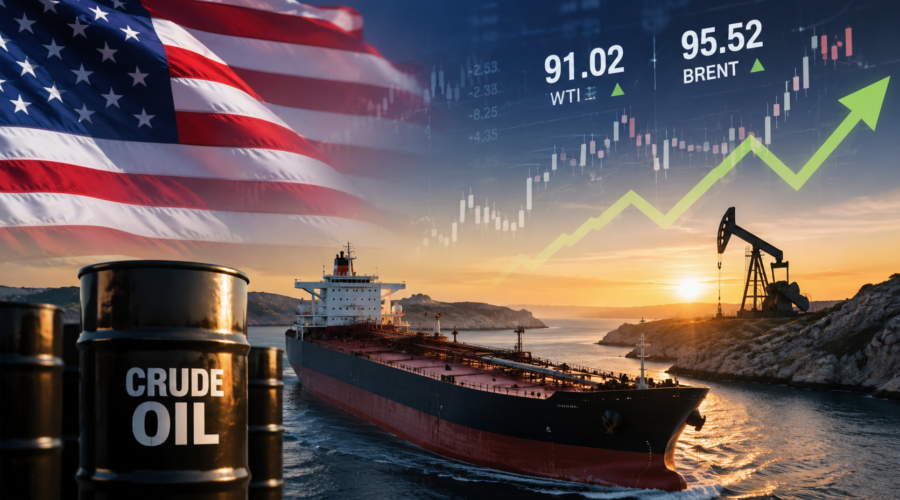
Brent crude reached around $95.52 per barrel, while U.S. West Texas Intermediate (WTI) climbed to approximately $91.02 per barrel, according to Reuters. The latest move followed gains of more than $4 a barrel the previous day.
The surge has put the oil market back in focus for investors, businesses and American consumers because a prolonged disruption in the region could affect fuel prices, transportation costs and inflation.
Why Are Oil Prices Rising?
The latest oil-price jump is closely linked to the renewed escalation between the U.S. and Iran.
Fresh military strikes have increased concerns that the conflict could disrupt oil production, shipping and exports from the Persian Gulf.
One of the biggest concerns for the market is the Strait of Hormuz, a narrow but strategically important waterway through which a significant share of the world’s oil supply normally passes.
Reuters reported that about 17 million barrels of oil moved through the Strait of Hormuz on Monday, highlighting the importance of the shipping route to global energy markets.
When traders fear that oil shipments could be delayed or blocked, crude prices can rise quickly as markets price in a potential shortage.
Brent Crude Nears $96 While WTI Tops $91
The latest move has pushed both major oil benchmarks to levels that investors are watching closely.
- Brent crude: around $95.52 per barrel
- WTI crude: around $91.02 per barrel
- Both benchmarks extended the sharp gains seen earlier in the week.
Brent is the major international benchmark, while WTI is the primary U.S. crude benchmark.
The difference between the two prices reflects variations in crude quality, location and transportation costs.
The latest rally shows how quickly geopolitical developments can influence energy markets.
What Is the Strait of Hormuz and Why Does It Matter?
The Strait of Hormuz connects the Persian Gulf with the Gulf of Oman and the Arabian Sea.
It is one of the world’s most important energy shipping routes.
Any major disruption in the waterway could make it more difficult or expensive for oil tankers to move crude from major Middle Eastern producers to international markets.
That is why traders closely monitor military activity, tanker movements and government statements whenever tensions in the region increase.
The possibility of prolonged disruption creates what economists and energy analysts often call a geopolitical risk premium in oil prices.
In simple terms, traders are willing to pay more for oil because they are worried that future supplies could become less certain.
Could Oil Prices Reach $100?
The possibility of crude oil returning to the $100-per-barrel level is now one of the major questions facing energy markets.
Oil prices do not automatically reach $100 simply because geopolitical tensions increase. The eventual price will depend on several factors, including:
- How long the U.S.-Iran conflict continues
- Whether the Strait of Hormuz remains disrupted
- How many tankers can continue moving safely
- Global oil inventories
- U.S. production
- OPEC+ production decisions
- Global demand
- Any diplomatic agreement that reduces tensions
A sustained disruption to physical oil supplies could push prices significantly higher.
On the other hand, if shipping conditions improve or tensions ease, some of the geopolitical premium could quickly disappear.
What Does Higher Oil Mean for Americans?
For U.S. consumers, higher crude prices can eventually show up at the gas pump.
However, crude oil prices and gasoline prices do not move by exactly the same amount or at exactly the same time.
Gasoline prices are also affected by refinery capacity, seasonal demand, transportation costs, taxes and regional market conditions.
If oil remains above $90 for an extended period, Americans could face higher fuel costs.
That could increase expenses for:
- Drivers
- Airlines
- Trucking companies
- Delivery businesses
- Manufacturers
- Retailers
- Other transportation-dependent businesses
Higher transportation costs can also affect the prices of goods because companies may pass some of their additional costs to consumers.
Could Higher Oil Prices Increase Inflation?
Another major concern is inflation.
Energy is an important part of the broader U.S. economy. When fuel becomes more expensive, transportation and production costs can increase.
If higher energy costs spread through the economy, inflation could become more difficult to bring down.
That creates a challenge for the Federal Reserve.
The Fed has to balance inflation risks against economic growth and employment conditions.
A prolonged oil-price shock could therefore influence expectations about future U.S. interest-rate decisions.
What Could Happen to the Stock Market?
Higher oil prices can create mixed results for stocks.
Energy producers may benefit from higher crude prices because stronger oil prices can increase revenue and profit expectations.
But many other industries face higher costs.
Airlines, transportation companies, manufacturers and consumer businesses can be particularly sensitive to higher energy expenses.
Investors are therefore watching both oil prices and bond yields as they assess the potential economic impact.
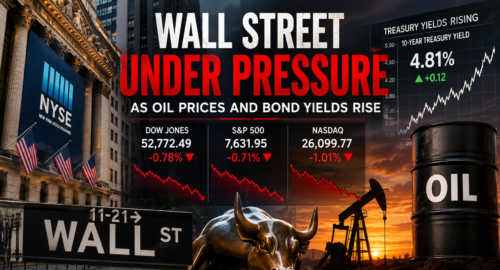
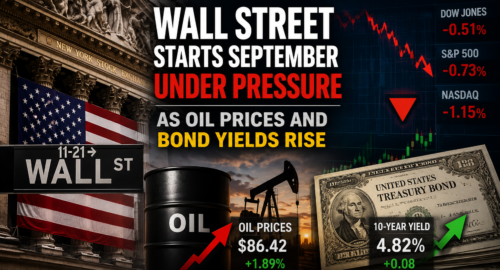
U.S. stocks already came under pressure on September 1 as rising oil prices contributed to inflation concerns. The S&P 500 fell 0.7%, the Dow declined 0.8%, and the Nasdaq dropped 1%.
What Happens Next?
The next few days could be critical for the oil market.
Traders will closely watch:
- U.S.-Iran military developments
- Oil tanker traffic through the Strait of Hormuz
- U.S. crude inventories
- OPEC+ production
- Global demand forecasts
- Diplomatic negotiations
- U.S. gasoline prices
If tensions continue to escalate and physical oil shipments are disrupted, crude prices could remain elevated.
If tensions ease and shipping resumes normally, prices could move lower as traders remove some of the geopolitical risk premium.
The Bottom Line
Oil prices are rising because markets are increasingly concerned about the security of global energy supplies amid renewed U.S.-Iran tensions.
With Brent crude near $96 and WTI above $91, the oil market is once again approaching the psychologically important $100 level.
For Americans, the biggest question is not simply whether oil reaches $100. The more important question is how long prices remain elevated.
A short-lived spike could have a limited economic impact. A prolonged disruption, however, could increase gasoline and transportation costs, add pressure to inflation and complicate the outlook for interest rates.
For now, investors and consumers will be watching the Strait of Hormuz and the next developments in the U.S.-Iran conflict closely.
Frequently Asked Questions
Why are oil prices rising today?
Oil prices are rising because renewed U.S.-Iran military tensions have increased concerns about potential disruptions to crude supplies and shipping through the Strait of Hormuz.
What is the current WTI oil price?
WTI crude reached approximately $91.02 per barrel on September 2, 2026, according to Reuters’ latest report.
What is the current Brent oil price?
Brent crude reached approximately $95.52 per barrel amid renewed U.S.-Iran tensions.
Could oil reach $100 a barrel?
Yes, oil could potentially reach $100 if supply disruptions become more severe or prolonged. However, the price will depend on the duration of the conflict, shipping conditions, production and global demand.
Will higher oil prices increase U.S. gas prices?
Higher crude prices can put upward pressure on U.S. gasoline prices, although the timing and size of the increase depend on refinery conditions, regional markets, taxes and other factors.
Why is the Strait of Hormuz important?
The Strait of Hormuz is a critical energy shipping route connecting the Persian Gulf with international markets. Large volumes of oil pass through the waterway, making any disruption important for global energy prices.
Source: Reuters and other market reports
Last updated: September 2, 2026