
Wall Street started September on a cautious note as rising oil prices, higher Treasury yields and renewed geopolitical tensions weighed on U.S. stocks.
U.S. stocks began September under pressure as investors reacted to a sharp rise in oil prices and higher bond yields, raising fresh concerns about inflation and interest rates.
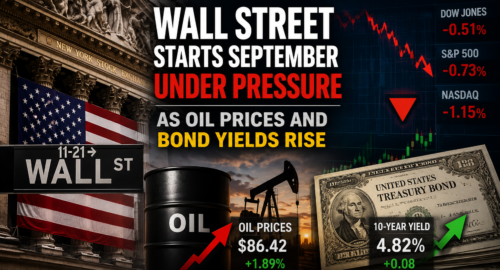
The Dow Jones Industrial Average, S&P 500 and Nasdaq Composite all finished lower on Tuesday, September 1, as renewed U.S.-Iran hostilities pushed crude prices higher and a global bond sell-off lifted Treasury yields.
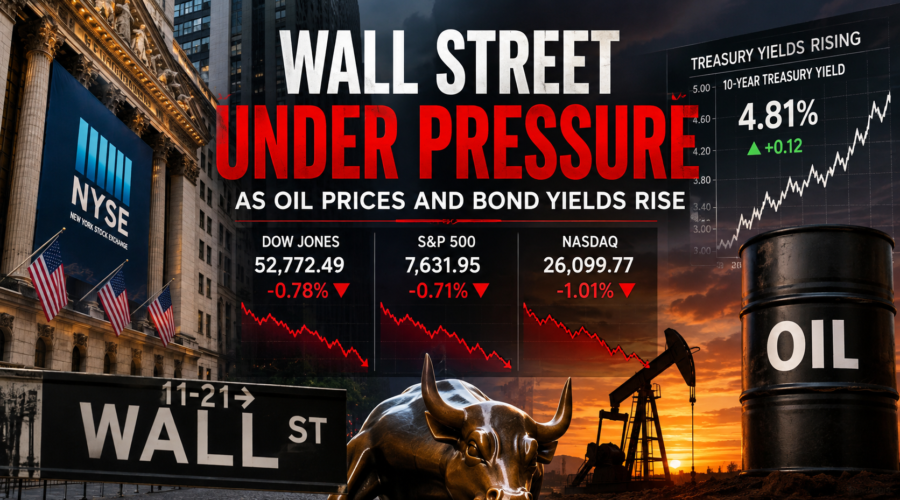
The S&P 500 fell about 0.71% to 7,631.95, while the Nasdaq Composite dropped 1.01% to 26,099.77. The Dow Jones Industrial Average declined 0.78% to 52,772.49.
For investors, the combination of higher energy costs and rising borrowing costs is becoming an important market story as September begins.
Why Is Wall Street Falling?
The latest decline has been driven by several factors rather than one single event.
1. Oil Prices Are Rising
Oil prices moved higher as renewed military tensions involving the United States and Iran increased concerns about potential disruptions to energy supplies.
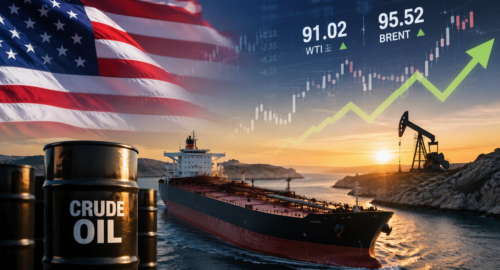
Brent crude climbed above $95 per barrel on Wednesday, while U.S. West Texas Intermediate crude moved above $91 per barrel.
Higher oil prices matter for the U.S. economy because they can increase transportation, manufacturing and household energy costs.
If elevated oil prices persist, investors may become more concerned that inflation could remain higher for longer.
2. Treasury Yields Are Moving Higher
Another major source of pressure is the U.S. bond market.
The benchmark 10-year Treasury yield reached around 4.81%, its highest level since late 2023, according to Reuters.
Higher Treasury yields can make bonds more attractive compared with stocks while also increasing borrowing costs across the economy.
That can put pressure on companies, consumers and interest-rate-sensitive sectors.
3. Investors Are Watching the Federal Reserve
The combination of higher oil prices and rising bond yields is also changing expectations for Federal Reserve policy.
Markets have increased their expectations for a September rate hike as inflation concerns return. Reuters reported that traders were pricing in roughly a two-thirds probability of a 25-basis-point increase.
That is important because investors had been hoping for easier monetary policy.
If inflation remains stubborn, the Federal Reserve could have less room to cut rates.
What Happened to the Major U.S. Stock Indexes?
Wall Street’s three major indexes all ended lower as investors moved into a more defensive mood.
S&P 500: down about 0.71%
Nasdaq Composite: down about 1.01%
Dow Jones Industrial Average: down about 0.78%
The Nasdaq was particularly sensitive to the rise in yields because higher interest rates can reduce the appeal of high-growth technology companies.
The Dow also suffered a significant decline as investors assessed the broader economic impact of higher energy costs and borrowing rates.
Why Higher Oil Prices Matter for Americans
The market reaction is not limited to Wall Street.
Higher crude prices can eventually affect consumers through gasoline, transportation and other energy-related costs.
Airlines, shipping companies and other fuel-intensive businesses can face higher operating expenses when oil prices rise.
Consumers may also feel the impact if higher energy costs feed into broader inflation.
This is why investors are closely watching whether the latest oil-price increase is temporary or becomes a longer-lasting trend.
Could Higher Oil Prices Push Inflation Higher?
That is one of the biggest questions facing markets right now.
Oil is an important input across the economy. When crude prices rise significantly, businesses may face higher costs for transportation, production and logistics.
Some of those costs can eventually be passed on to consumers.
The concern becomes even greater if higher energy prices occur at the same time as rising wages or other persistent inflation pressures.
For the Federal Reserve, this creates a difficult policy environment.
A stronger inflation outlook could make policymakers more cautious about cutting interest rates.
What Does This Mean for the Federal Reserve?
The latest market moves have increased attention on the Fed’s September policy decision.
Before the recent jump in oil prices and bond yields, investors had been focused heavily on the possibility of easier monetary policy.
Now, rising energy prices are complicating that outlook.
If oil remains elevated, inflation expectations could move higher and make a rate cut less likely.
At the same time, policymakers must consider the possibility that tighter financial conditions could slow economic growth.
That leaves investors watching upcoming inflation, employment and economic-growth data very closely.
Why Rising Bond Yields Can Hurt Stocks
Bond yields and stock valuations are closely connected.
When Treasury yields rise, investors can receive a higher return from relatively lower-risk government securities.
That can make stocks less attractive at the margin.
Higher yields can also increase the discount rate used to value future corporate earnings.
Growth companies are often particularly sensitive because a larger portion of their expected value may depend on earnings further in the future.
That helps explain why technology-heavy indexes such as the Nasdaq can react strongly when Treasury yields rise.
What Investors Are Watching Next
Markets are likely to remain focused on several major developments.
Oil Prices
Investors will watch whether Brent crude remains above $90 or moves even higher.
A sustained oil rally could increase concerns about inflation.
Treasury Yields
The 10-year Treasury yield is another critical market indicator.
A continued move toward higher yields could put additional pressure on equity valuations.
Federal Reserve Signals
Any comments from Federal Reserve officials could influence expectations for September interest rates.
U.S.-Iran Developments
Further escalation or signs of de-escalation could quickly affect oil prices and market sentiment.
Economic Data
Investors will also be watching upcoming inflation, employment and manufacturing data for clues about the strength of the U.S. economy.
Is This the Start of a Bigger Stock Market Correction?
It is too early to say.
One or several weak trading sessions do not automatically mean a major market correction is beginning.
However, the current combination of geopolitical uncertainty, higher oil prices, elevated Treasury yields and changing Federal Reserve expectations creates a more challenging environment for stocks.
Investors will be looking for signs that oil prices stabilize and bond yields stop climbing.
If those pressures ease, Wall Street could regain momentum.
If they continue to worsen, volatility could remain elevated throughout September.
What Could Happen to Wall Street Next?
The next phase of the market could depend heavily on oil prices and interest-rate expectations.
A decline in geopolitical tensions could reduce oil prices and ease inflation concerns.
On the other hand, a prolonged rise in crude prices could put additional pressure on consumers and businesses while making monetary policy more difficult for the Federal Reserve.
For investors, September could therefore become an important test of whether the U.S. stock market can maintain its recent strength despite rising economic and geopolitical risks.
Bottom Line
Wall Street’s weak start to September highlights a growing connection between geopolitics, oil prices, inflation and interest rates.
The S&P 500, Nasdaq and Dow all moved lower as investors reacted to rising crude prices and higher Treasury yields.
The biggest question now is whether these pressures are temporary or become a longer-lasting trend.
For Americans and investors alike, oil prices, Treasury yields and Federal Reserve policy will be three of the most important indicators to watch as September unfolds.
This article is for informational purposes only and should not be considered financial or investment advice. Market conditions can change rapidly.