
Wall Street Starts September on a Weak Note
U.S. stocks began September under pressure as investors faced a combination of rising oil prices, higher Treasury yields and renewed concerns about inflation.
The Dow Jones Industrial Average, S&P 500 and Nasdaq Composite all opened lower on Tuesday, September 1, as investors returned from the August holiday period and reassessed the outlook for interest rates and economic growth.
The weakness comes at a difficult time for markets because September has historically been one of the weakest months for U.S. stocks.
According to Reuters, the S&P 500 has historically averaged a decline of about 0.7% in September since 1926.
Why Are Stocks Falling?
There are several factors putting pressure on Wall Street right now.
1. Oil Prices Are Rising
Higher oil prices are one of the biggest concerns for investors.
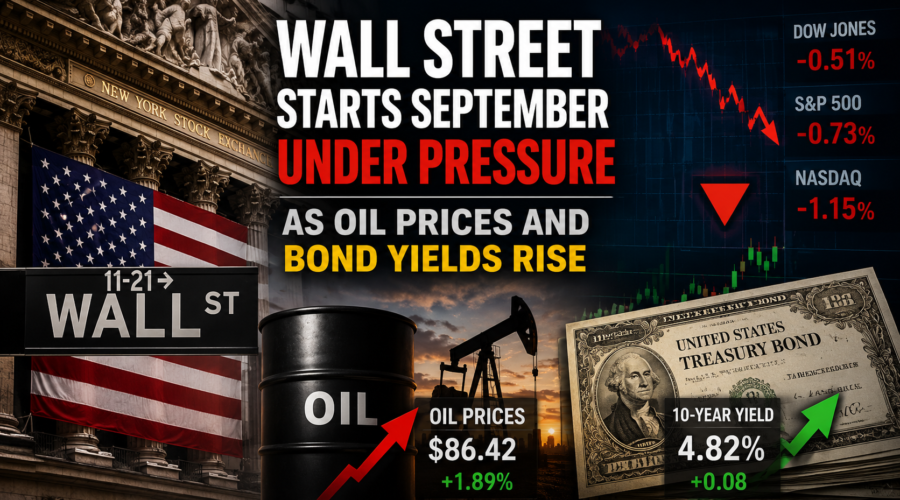
Brent crude prices rose sharply as renewed tensions in the Middle East increased worries about global energy supplies. Reuters reported that Brent crude was up around 1.9% in early trading on September 1.
When oil becomes more expensive, transportation, manufacturing and other business costs can increase.
That can eventually push consumer prices higher.
For investors, this creates a difficult situation because higher inflation could make it harder for the Federal Reserve to reduce interest rates.
2. Treasury Yields Are Climbing
Another major issue is the rise in U.S. Treasury yields.
The selloff in government bonds has pushed yields to their highest levels in months, increasing borrowing costs across the economy.
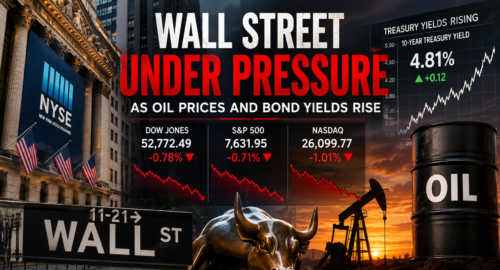
The benchmark 10-year Treasury yield was around 4.8%, according to market reports.
Higher Treasury yields can make stocks less attractive because investors can earn more from relatively low-risk government bonds.
They can also put pressure on technology and growth companies because higher interest rates reduce the present value investors assign to future earnings.
3. Investors Are Worried About Inflation
Oil and bond yields are closely connected to the inflation debate.
If energy prices remain elevated, inflation could become harder to control.
That is especially important for the Federal Reserve as investors try to determine what the central bank might do with interest rates in September.
The market is increasingly focused on whether inflation pressures will remain strong enough to keep rates higher for longer.
Technology Stocks Face Pressure
Technology stocks were among the weaker areas of the market.
Chip stocks including Nvidia, Intel and AMD were lower before the market opened, according to Reuters.
Technology companies are particularly sensitive to changes in interest rates because many investors value them based on expected earnings far into the future.
When bond yields rise, those future earnings can become less valuable in today’s dollars.
That can lead investors to reduce exposure to high-growth stocks.
What Happened When Wall Street Opened?
At the opening bell on September 1, all three major U.S. indexes moved lower.
The Dow Jones Industrial Average fell about 0.19% at the open.
The S&P 500 dropped about 0.66%.
The Nasdaq Composite declined roughly 1.29%.
The weakness showed that investors were starting the new month cautiously.
September Could Be a Challenging Month
September has a reputation for being difficult for stocks.
Historical data cited by Reuters shows that the S&P 500 has produced its weakest average monthly performance in September over a long period of market history.
However, seasonal patterns don’t necessarily mean stocks will fall every September.
Market strategists also point out that investors should focus on economic fundamentals rather than trying to predict markets purely from historical seasonality.
Jobs Data Could Become the Next Big Market Catalyst
Investors are also watching U.S. employment data closely.
The Labor Department’s Job Openings and Labor Turnover Survey, known as JOLTS, is scheduled to provide another look at the labor market.
The bigger focus will be the upcoming monthly employment report.
Investors will examine the data for clues about inflation, economic growth and the Federal Reserve’s next policy decision.
A strong labor market combined with persistent inflation could make it harder for policymakers to lower rates.
On the other hand, signs of weakening employment could strengthen expectations for easier monetary policy.
What Does This Mean for Investors?
The current market environment creates a difficult balance.
On one side, the U.S. economy remains relatively resilient.
On the other, investors are dealing with:
- Higher oil prices
- Rising Treasury yields
- Inflation concerns
- Geopolitical uncertainty
- Pressure on technology stocks
- Uncertainty around Federal Reserve policy
- Historically weak September seasonality
These factors can increase volatility.
Investors may therefore pay closer attention to economic data and company earnings during the coming weeks.
Energy Stocks Could Benefit
Not every part of the market is under pressure.
Energy stocks have been gaining support from higher crude prices.
Exxon Mobil and Devon Energy were among the energy companies moving higher in early trading as oil prices increased.
This creates an interesting market split.
Higher oil prices can hurt many companies through increased costs, while energy producers can benefit from stronger commodity prices.
What Should Investors Watch Next?
There are several important factors investors will be watching during September.
Federal Reserve policy
Any new comments from Federal Reserve officials could move markets quickly.
Inflation data
Investors need to know whether higher energy prices are beginning to create broader inflation pressure.
Jobs data
Employment numbers will provide clues about the strength of the U.S. economy.
Oil prices
A continued rise in crude could increase inflation concerns.
Treasury yields
If yields continue climbing, pressure on growth and technology stocks could increase.
Geopolitical developments
Further developments in the Middle East could affect energy prices and global investor confidence.
The Bigger Picture
Wall Street’s weak start to September does not necessarily mean a major market crash is coming.
Instead, it highlights the growing number of risks investors are currently balancing.
Oil prices are rising.
Treasury yields are elevated.
Inflation remains a concern.
And investors are trying to determine how the Federal Reserve will respond.
For now, Wall Street appears to be entering September with a more cautious mindset.
The next major economic reports could determine whether this weakness is simply a temporary pullback or the beginning of a more significant period of market volatility.
Frequently Asked Questions
Why is Wall Street falling in September 2026?
Wall Street is under pressure because oil prices and Treasury yields have risen, increasing concerns about inflation and future interest rates.
Why are higher Treasury yields bad for stocks?
Higher Treasury yields can make government bonds more attractive compared with stocks and can increase borrowing costs for companies and consumers.
Why are oil prices rising?
Renewed geopolitical tensions in the Middle East have increased concerns about energy supplies, helping push crude prices higher.
Which U.S. stock indexes are under pressure?
The Dow Jones, S&P 500 and Nasdaq Composite all opened lower on September 1. The Nasdaq experienced the largest opening decline of the three major indexes.
Is September usually bad for stocks?
Historically, September has been the weakest month for the S&P 500 based on long-term average performance, although historical patterns do not guarantee future results.
What should investors watch next?
Investors will be watching employment data, inflation reports, oil prices, Treasury yields and Federal Reserve comments for clues about the direction of markets.